Blog Topic: “Bioart and Post-Humanism” by Angelo Vermeulen
Student Name: Chan Pak San
Student number: 57155254
Introduction
Vermeulen created frameworks where humans, biological systems, and technologies become co-authors rather than master and subjects while his approach resonating deeply with Hans Jonas’s critique from our lecture about anthropocentric ethics being inadequate for our technological age, he doesn’t just make art about post-humanism but created living systems where agencies are distributed across multiple actors and challenged the human-centered worldview that has dominated both art and science.
Artwork & Analytics
Biomodd (2007)
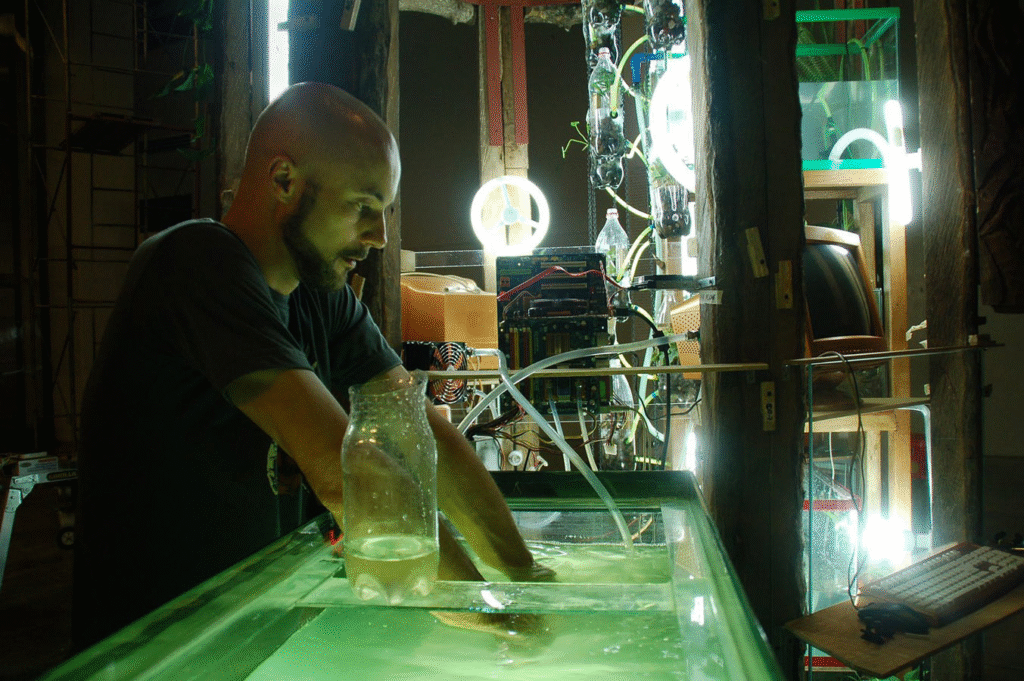
(Img source: https://www.angelovermeulen.net/wp-content/uploads/2015/01/Biomodd-LBA2-2009_algae-cooling01_photo-by-Trixie-Beredo.jpg)
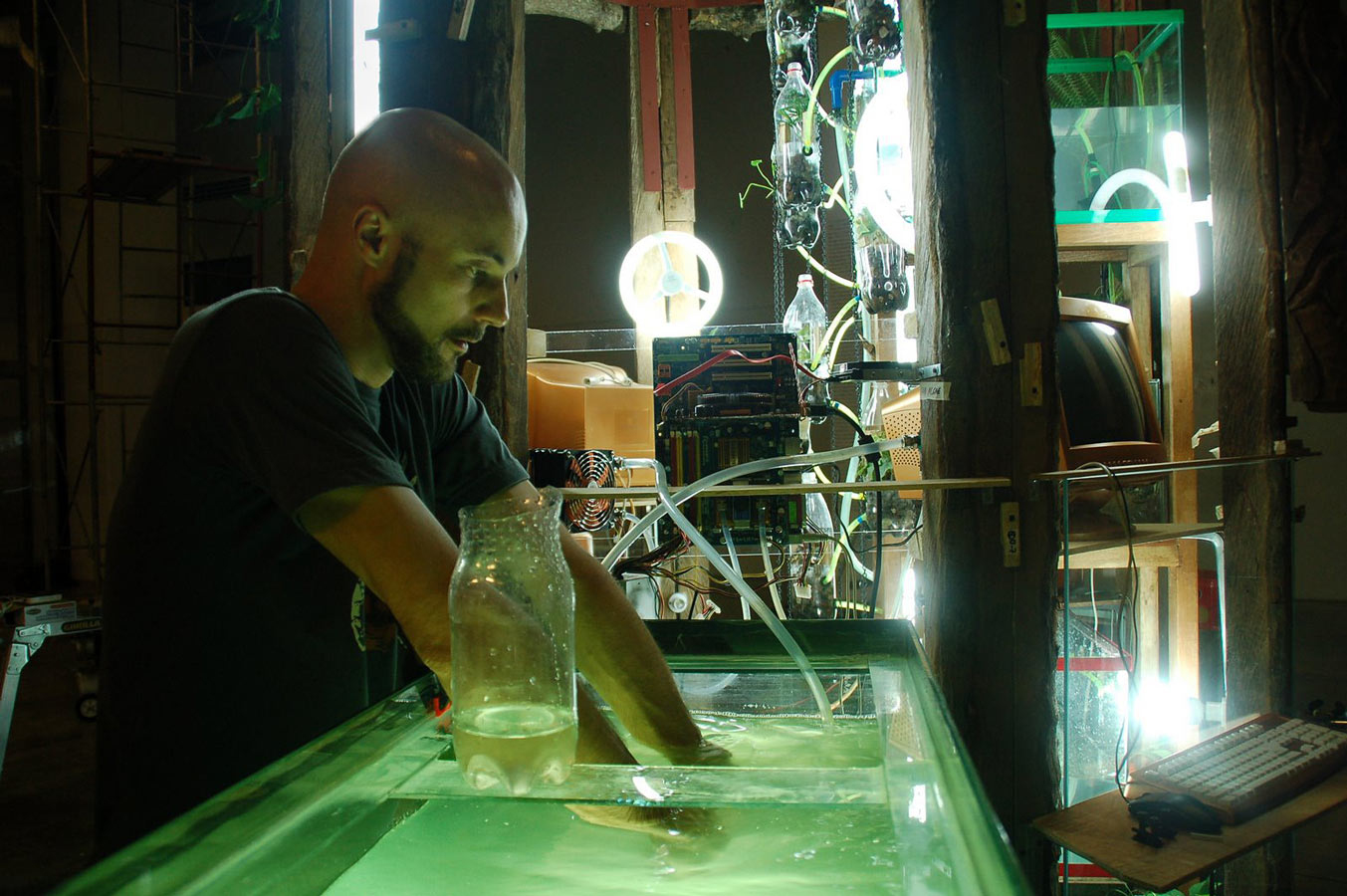
It completely reshaped how I think about human-technology-nature relationships. This globally replicated project where communities build installations of computer waste heat sustains algae or plant growth while these living systems cool the electronics is a perfect symbiosis of the relationship. And I think what makes this work so powerfully post-humanist isn’t just about technical integration of the technologies but how Vermeulen surrenders the authorship to participants and organisms alike. From the workshop footage from Athens where homeless people, students, and the algae itself all became co-creators, dissolving hierarchies between human with non-human and natural with technological in ways that directly confront the “co-creation with nature” versus “playing god” dichotomy we discussed.
Seeker (2012)
(Img source: https://www.angelovermeulen.net/wp-content/uploads/2015/02/s08.jpg)
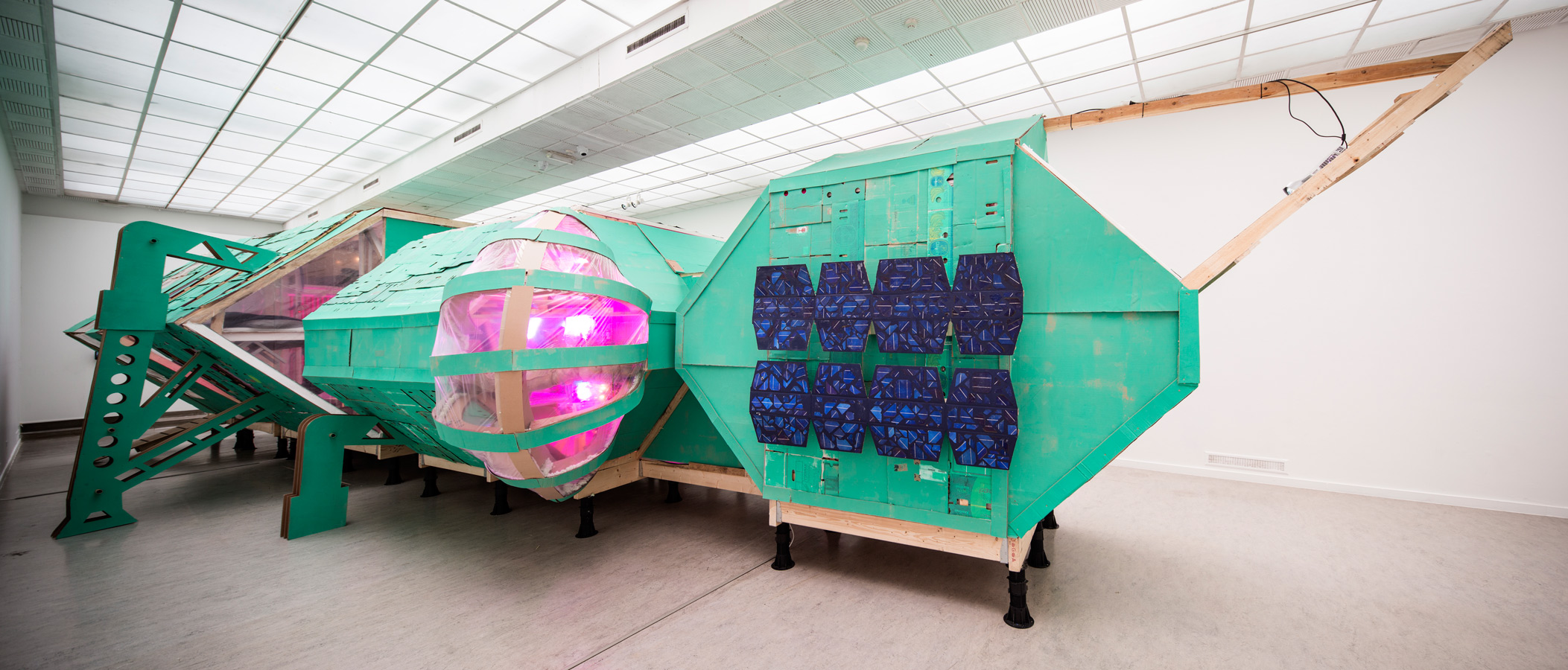
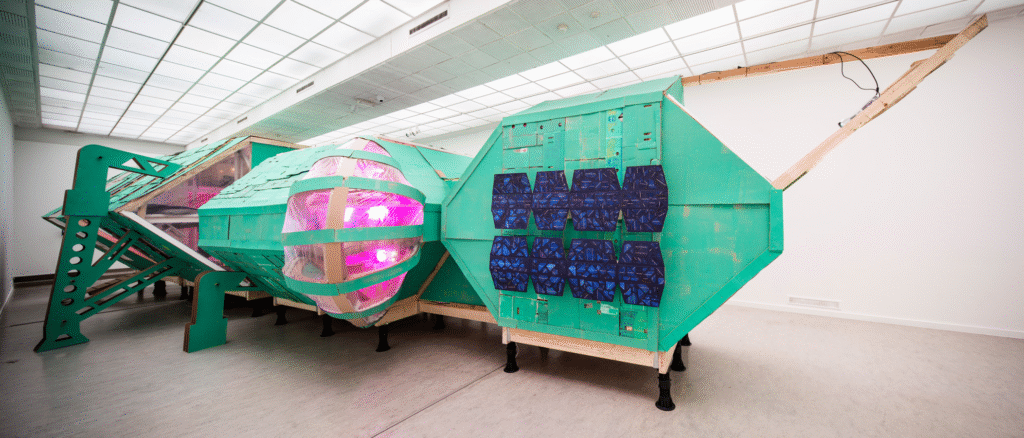
Seeker meanwhile extendd this thinking to cosmic scales while subverting traditional space exploration narratives, instead of sleek spacecraft designed by experts, he facilitated communities worldwide to build speculative vessels from local materials and knowledge where Philippine fishing communities incorporated traditional boat-building techniques and while Detroit residents used automotive industry scraps. This approach challenged the colonial, anthropocentric logic of conventional space programs of suggesting interstellar survival might in fact require abandoning human exceptionalism altogether. Like the “myth-making” practices, (such as Agnes Meyer-Brandis’s Moon Goose Colony), Seeker creates new narratives but crucially they emerge from collective imagination rather than a single artist’s vision, embodying what Jonas called for an ethics that considers how our actions affect more-than-human worlds.
Conclusion
Vermeulen’s practice has fundamentally changed how I understand art’s role in the post-human condition. Many artists use biology as medium to make statements but here he created the conditions where control is deliberately distributed across human and non-human actors. I think in a world where technologies have increasingly centralizes power, his commitment through these works to community co-creation and symbiotic systems have offered something hopeful to us as they are not just representing alternative futures but showing enacting of them through collaborative practice. And I see his work as performing the very post-humanist relationships our current ethical frameworks struggle to accommodate which Vermeulen are making abstract philosophy tangible through warmth-giving computers embraced by plant roots and spacecraft built from collective dreams rather than corporate agendas.